ENG
ENG


 David
David Thailand Launches "Don’t Drink and Drive" Drive Ahead of Songkran Rush
As Thailand prepares for one of its most vibrant and widely celebrated festivals, the government is taking a firm and proactive stance to ensure that joy does not turn into tragedy. Under the direction of Anutin Charnvirakul, a series of nationwide measures have been introduced to make travel safer and smoother during the upcoming Songkran festival.
Songkran, often referred to as the Thai New Year, is a time when millions of people travel across the country to reunite with family, visit temples, and participate in traditional water celebrations. However, it is also historically known as one of the most dangerous periods on Thai roads, earning the nickname “Seven Dangerous Days” due to the spike in traffic accidents.
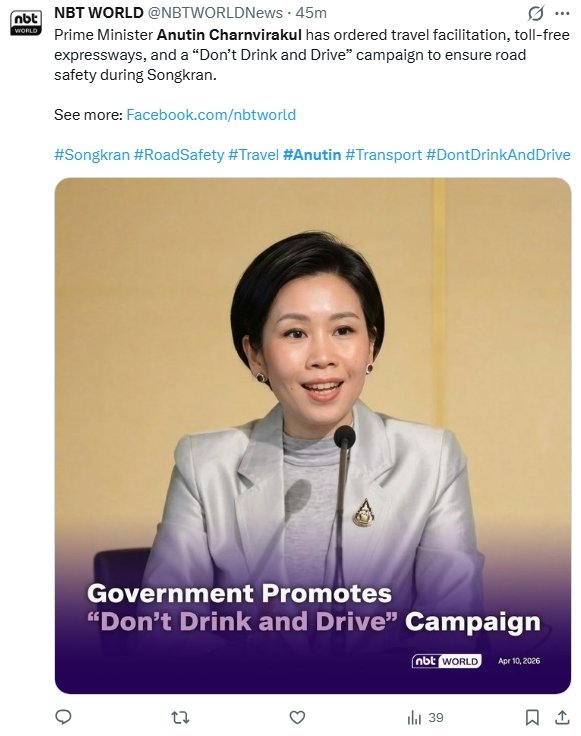
Recognizing this recurring challenge, the government has moved beyond routine advisories and implemented concrete steps aimed at both convenience and safety.
One of the most impactful measures this year is the introduction of toll-free expressways during peak travel days. This initiative is designed to ease congestion, reduce travel costs, and encourage drivers to use safer, well-maintained highways instead of smaller, riskier routes. For many families, especially those traveling long distances, this move not only reduces financial burden but also shortens travel time - something that can significantly lower fatigue-related accidents.
Moreover authorities are also focusing heavily on travel facilitation. This includes better traffic management, increased presence of highway patrol units, and improved coordination between transport agencies. Checkpoints are being strategically placed, not just to enforce rules, but to assist travelers, provide directions, and ensure vehicles are roadworthy.
Yet, perhaps the most important element of this campaign is behavioral change specifically targeting drunk driving.
The “Don’t Drink and Drive” campaign has been strongly emphasized this year. During Songkran, alcohol consumption tends to rise as people celebrate with friends and family. Unfortunately, this has historically contributed to a significant number of road accidents. The government’s campaign is not just about enforcement, but awareness reminding citizens that a moment of carelessness can have lifelong consequences.
Authorities are increasing breathalyzer checks, especially in high-risk areas, and imposing stricter penalties for violations. But beyond penalties, the messaging is clear and human: celebrations should never come at the cost of someone’s life.
What makes this year’s approach stand out is the balance between enforcement and empathy. Instead of relying solely on strict rules, the thailand government is trying to make safe choices easier - whether by providing better roads, reducing travel stress, or continuously reminding people of their responsibility toward others.
There is also a cultural understanding behind these measures. Songkran is not just a holiday - it’s deeply emotional. It’s about returning home, reconnecting, and starting the new year with positivity. Ensuring that people reach their destinations safely is, in many ways, preserving the spirit of the festival itself.
While no system can eliminate risks entirely, these combined efforts signal a serious commitment to change the narrative around Songkran travel. If successfully implemented and supported by public cooperation, this could mark a shift from a period known for accidents to one remembered for safe and joyful celebrations.
In the end, policies can guide and systems can support but road safety ultimately depends on individual choices. As millions take to the roads this Songkran, the message remains simple and powerful: celebrate responsibly, travel safely, and look out for one another.
Comments
Comments are closed.





.jpg)